Thin Section Bearings for Compact and High-Precision Industrial Applications

Thin Section Bearings for Compact and High-Precision Industrial Applications
时间:2026-03-18 人气:

In today’s manufacturing environment, machine designers are under constant pressure to do more with less. Equipment is expected to become smaller, lighter, faster, and more accurate, while still maintaining reliable long-term performance. This trend can be seen across a wide range of industries, from robotics and medical systems to semiconductor equipment and automated production lines. As space becomes more limited and performance expectations continue to rise, component selection plays an increasingly important role in overall machine design.

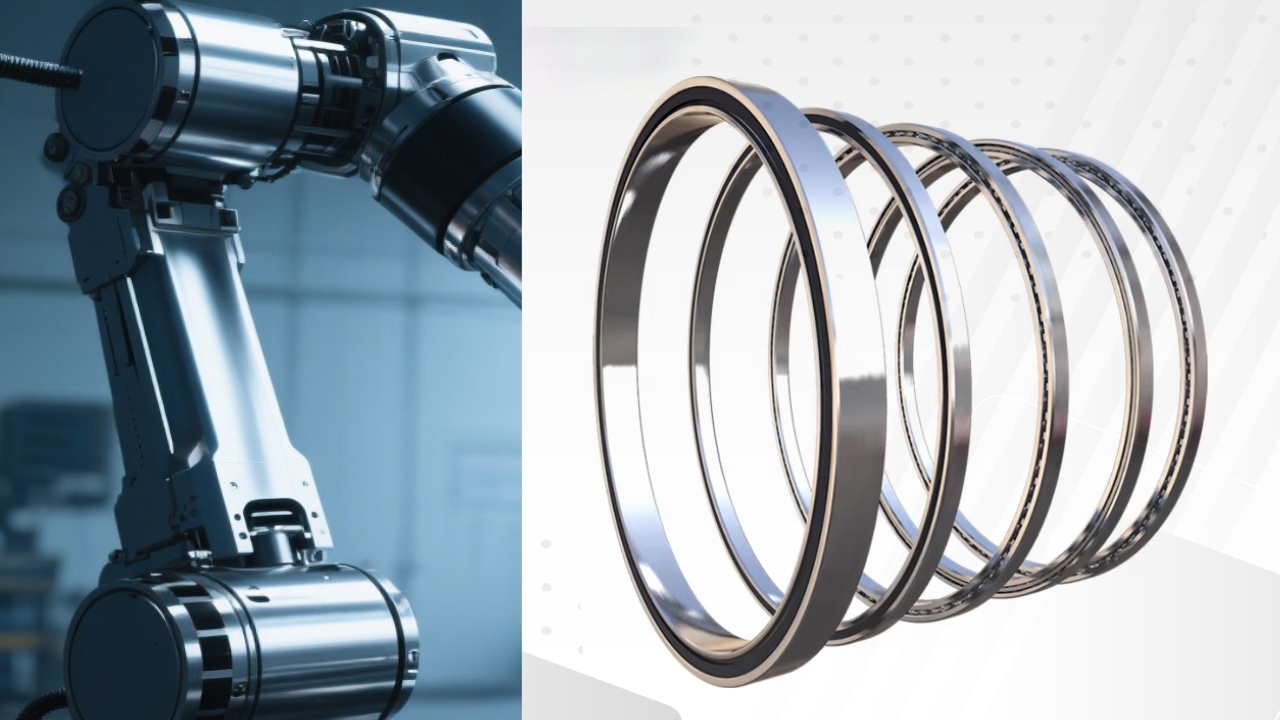
用于紧凑型高精度工业应用的薄截面轴承1.jpg

Among these critical components, bearings are often more influential than they first appear. A well-chosen bearing can improve running accuracy, reduce structural weight, save installation space, and support a more efficient mechanical layout. For many compact and precision-driven applications, thin section bearings have become a preferred solution.


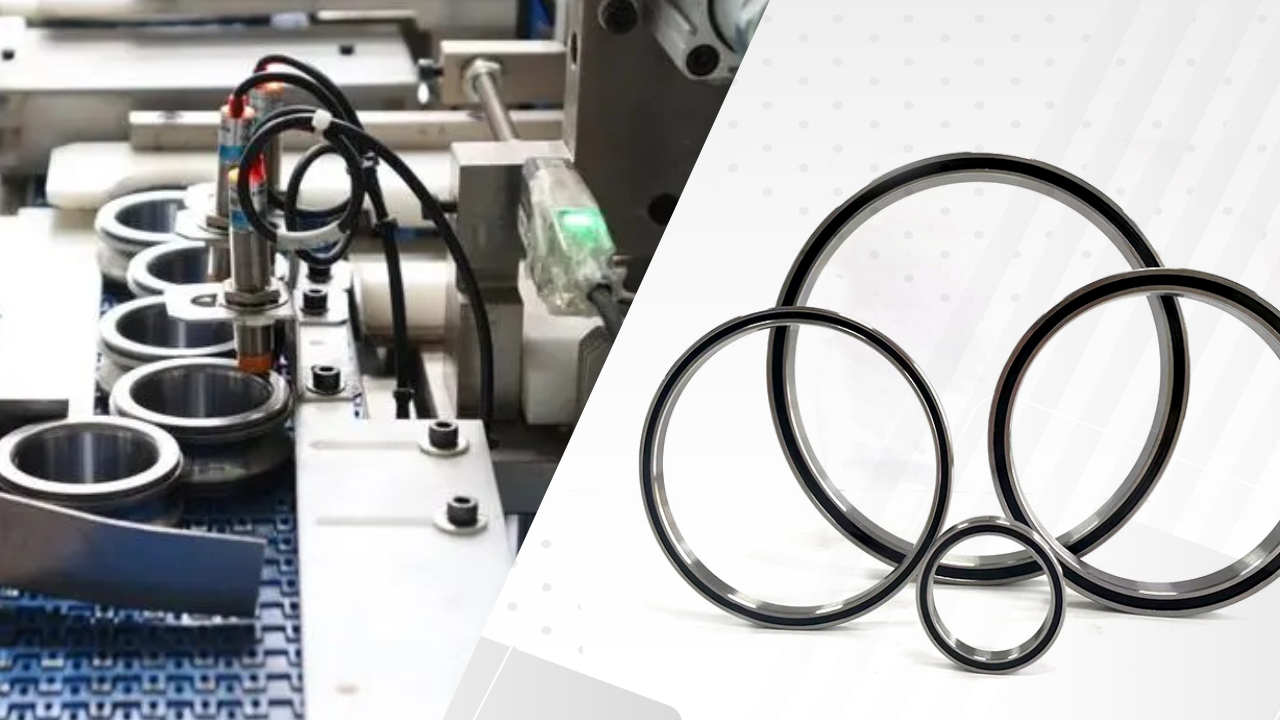
Thin section bearings are different from conventional bearings in one key way: their cross-section remains constant even as the bore diameter changes. This design allows engineers to use larger shaft diameters without significantly increasing the size or weight of the bearing itself. The result is a bearing that offers an excellent balance between compactness and mechanical performance.


One of the main reasons thin section bearings are widely used is their ability to help optimize limited installation space. In modern machinery, there is often little room for oversized components. Traditional bearings may perform well, but they can also add unnecessary bulk to the system. Thin section bearings provide a more space-efficient alternative, making them especially valuable in applications where compact design is a priority.


Weight reduction is another major advantage. In equipment such as robotic arms, optical devices, aerospace assemblies, and automated positioning systems, excess weight can affect motion control, response speed, and energy efficiency. By using a slimmer and lighter bearing design, manufacturers can reduce overall system mass without compromising rotational performance. This can lead to smoother operation, lower inertia, and improved design flexibility.


Thin section bearings are also known for their strong precision capabilities. In many applications, rotational accuracy is not optional. Even small deviations can influence final product quality or machine reliability. For this reason, thin section bearings are often selected for systems that require stable motion, repeatable positioning, and controlled running characteristics. When manufactured to a high standard, they can deliver excellent precision while supporting the compact structure demanded by modern equipment.


Depending on the working requirements, thin section bearings are available in several designs. Radial contact ball bearings are commonly used when radial load and smooth rotation are the main concerns. Angular contact thin section bearings are more suitable for combined radial and axial loads. Four-point contact versions are often chosen when a single bearing must carry axial loads in both directions, radial load, and overturning moment at the same time. This design flexibility allows engineers to choose a structure that closely matches the needs of the application.


Because of these characteristics, thin section bearings are used in many advanced industries. In robotics, they help support compact joints and rotating modules. In medical equipment, they contribute to lightweight and precise motion systems. In semiconductor and optical machinery, they are valued for their dimensional stability and running accuracy. In industrial automation, they help designers create compact mechanical assemblies without sacrificing performance. Their use is not limited to one sector; rather, they are a practical solution wherever precision and space efficiency must work together.


For overseas buyers, however, choosing thin section bearings is not only about selecting the right type. Supplier capability matters just as much as product design. In high-precision applications, consistency is essential. Buyers need more than a competitive quotation. They need a manufacturer that can maintain stable quality from one batch to the next and provide dependable support throughout the project.


This includes raw material control, precision machining, heat treatment stability, grinding accuracy, internal clearance management, cleanliness during assembly, and final inspection standards. A thin section bearing may look simple in appearance, but its actual performance depends heavily on manufacturing discipline. Poor dimensional control or inconsistent processing can lead to noise, reduced life, unstable rotation, or assembly issues in the customer’s equipment.


That is why many industrial buyers place great value on experienced bearing manufacturers with strong technical understanding. In practical sourcing, the best supplier is often not the one with the lowest initial price, but the one that can provide stable product quality, clear communication, and reliable long-term cooperation. Especially for OEM and replacement projects, technical matching is critical. A bearing must not only fit the drawing, but also perform correctly in the real application environment.

用于紧凑型高精度工业应用的薄截面轴承2.jpg

Customization has also become an important part of the thin section bearing market. Many customers need more than standard catalog models. They may require special materials, customized tolerances, unique lubrication options, corrosion-resistant treatment, or modified designs for special load and speed conditions. In these situations, engineering support from the supplier can make a significant difference. A manufacturer with practical production experience can often help customers improve both product performance and procurement efficiency.


As industrial systems continue moving toward compact design and higher functional integration, the role of thin section bearings is likely to become even more important. They support the broader direction of modern engineering: reduced space, lower weight, greater precision, and better design efficiency. For equipment manufacturers seeking smarter mechanical solutions, thin section bearings offer real and measurable value.


Selecting the right bearing is never just a purchasing task. It is part of product design, performance control, and long-term reliability planning. For applications where standard bearing structures are too large or too heavy, thin section bearings provide a practical alternative that aligns well with current engineering demands.


Whether the goal is to improve precision, reduce weight, or make better use of limited installation space, thin section bearings remain a reliable choice for a wide range of industrial applications.


Thin Section Bearings for Compact and High-Precision Industrial Applications
页面版权所有 ©2024 洛阳汇工轴承科技有限公司 网站建设:河南品讯网络科技有限公司